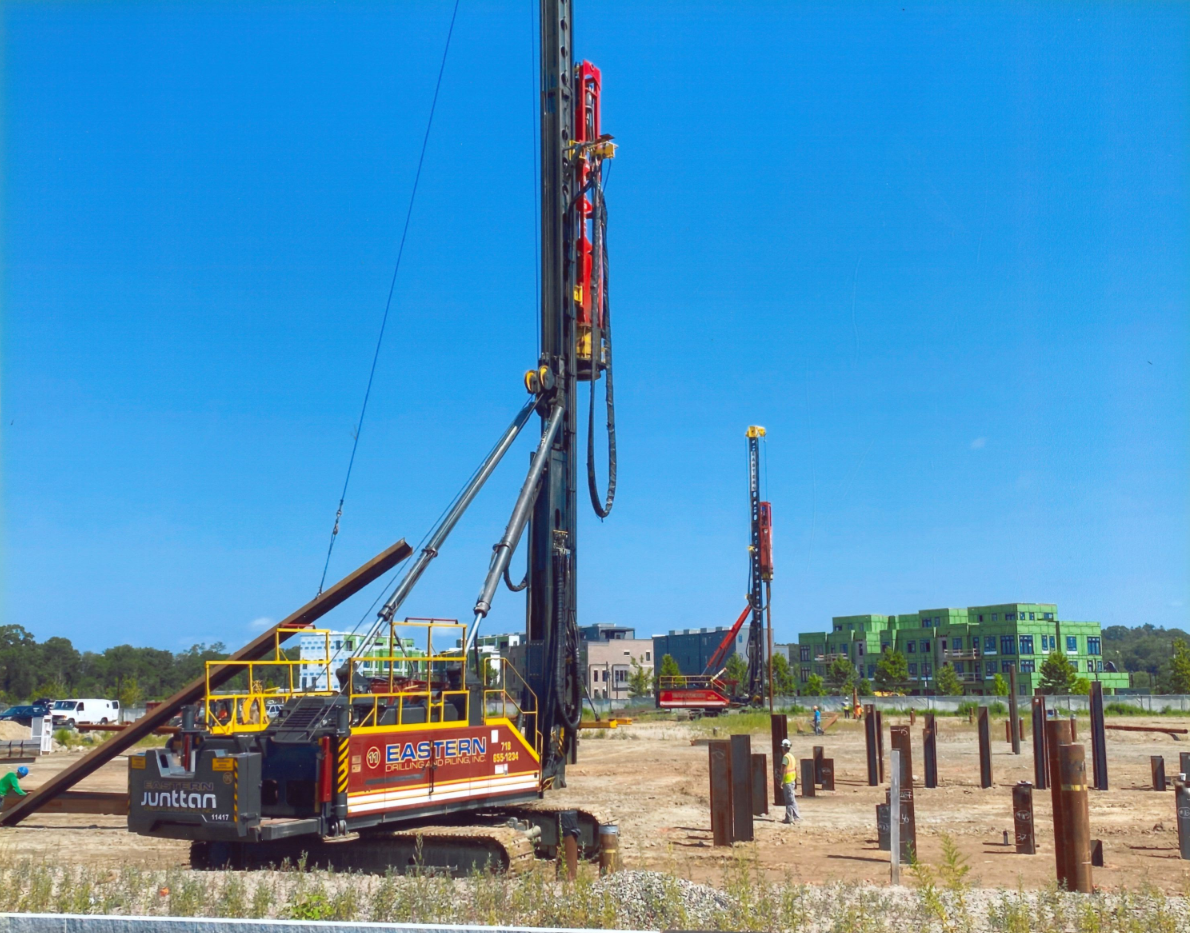
Deep Foundations
Services We Provide :
A. Pile Foundations
Slender, column-like members (steel, concrete, or timber) driven, drilled, or screwed into the ground.
- Driven Piles
Installed by impact or vibration.
- Materials:
- Steel H-piles
- Steel pipe piles
- Precast reinforced or prestressed concrete piles
- Timber piles
- Load Transfer: End bearing + friction
- Advantages: Reliable capacity, displacement densifies surrounding soil
- Applications: Bridges, waterfronts, industrial structures
- Cast-in-Situ (Bored) Piles
Concrete poured into drilled or bored holes.
- Subtypes:
- Straight shaft piles
- Underreamed piles (enlarged base)
- Pressure-grouted piles
- Advantages: Quiet installation, adaptable diameter/depth
- Disadvantages: Slower, sensitive to groundwater and stability
- Composite Piles
Combination of materials (e.g., steel + concrete, or timber + concrete).
Used where upper soil is aggressive or waterlogged.
- Mini Piles / Micro Piles
Small-diameter (3–12 in) drilled and grouted piles with steel bars or casings.
- Load Transfer: Friction
- Use: Underpinning, seismic retrofits, confined access sites
Deep Foundations
Deep foundations are structural elements that transfer building or structure loads to deeper, more competent soil or rock layers when near-surface soils are too weak or compressible to support them.
They’re used for heavy structures, poor ground conditions, waterfront construction, and large dynamic loads (like bridges or towers).
They develop strength from:
- End bearing — load transfer at the base into hard strata or rock
- Skin friction — load transfer along the surface between foundation and soil
- Or a combination of both.
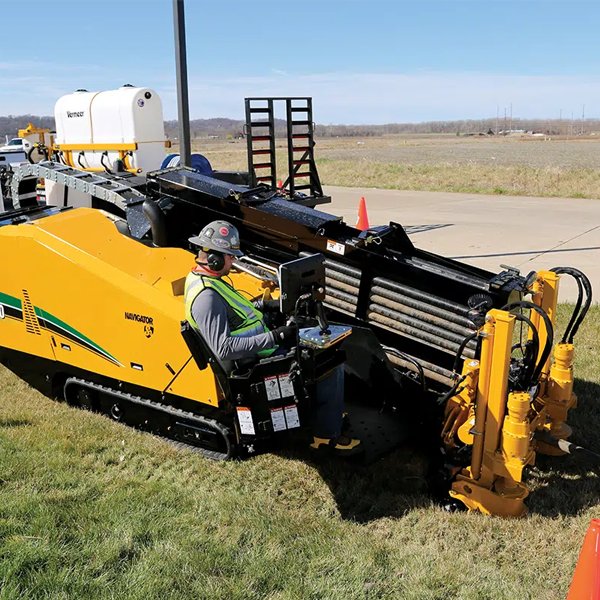
- Screw / Helical Piles
Steel shafts with one or more helical plates screwed into ground.
- Load Transfer: Combination of friction and bearing on helix plates
- Advantages: Fast, minimal vibration, reusable
- Applications: Solar farms, temporary foundations, light industrial or residential buildings
B . Pier Foundations
Short, columnar elements that carry loads to firm strata or rock.
- Drilled Shafts / Caissons
Large-diameter bored holes filled with concrete and reinforcement.
- Diameter: 18 in – 10+ ft
- Depth: Up to 200+ ft
- Subtypes:
- Dry caissons (stable ground)
- Cased caissons (unstable or wet ground)
- Rock-socketed shafts (extend into bedrock)
- Applications: Bridge piers, towers, high-rise foundations
- Bell or Underreamed Piers
Caissons with enlarged bases (“bells”) to increase bearing area and reduce settlement — used in expansive clay soils.
C. Shaft-Type Foundations
Specialized deep drilled holes acting as structural columns.
- Drilled Shafts (Bored Piers)
Similar to caissons but smaller, often reinforced with rebar cage and concrete. - Augercast (CFA) Piles
Constructed by drilling with continuous flight auger and pumping grout under pressure as auger is withdrawn.- Fast, quiet, ideal for urban areas.
D . Deep Foundations by Ground Improvement or Grouting
- Compaction Grouting
Injection of stiff grout bulbs to densify loose granular soils and support foundations.
- Jet Grouting
High-pressure jets create grout columns (2–6 ft diameter) in situ.
- Acts like a drilled shaft made of soil-cement.
- Ideal under existing structures.
- Root Piles
Small-diameter grouted piles that “branch” outward to increase friction area — used for retaining walls and retrofits.